When Hurricane Helene hit, roughly 80% of customers statewide had power restored within just a couple of days, yet in Savannah many homes still sat with standing water long after the lights came back on. Understanding how to handle water extraction during a power outage in Savannah can be the difference between a quick recovery and costly long-term damage.
Key Takeaways
| Common Question | Concise Answer |
|---|---|
| 1. What should I do first if my Savannah home floods during a power outage? | Protect people first, then stop the water source if it is safe, document the loss, and call a professional mitigation team like our emergency water damage team as soon as you can. |
| 2. Does homeowners insurance cover water extraction after a storm outage? | Standard policies often cover sudden, internal water damage, but not outside floodwater, which usually requires separate flood insurance as explained in our Savannah homeowners water damage guide. |
| 3. Is floodwater from tidal surge or river overflow treated differently? | Yes, outside rising water is usually classified as “flood damage”, which is why we walk many clients through the differences in our flood vs homeowners coverage overview. |
| 4. How does a power outage complicate water extraction? | Most extraction equipment, dehumidifiers, and fans require power, so we rely on generators, portable units, and careful staging to keep drying on track even when the grid is down. |
| 5. Will my deductible be higher for storm-related water damage? | In Georgia, many policies use percentage-based deductibles for wind or hurricane losses, which can be significant; our guide to lowering water-damage deductibles explains how to plan ahead. |
| 6. Are historic Savannah homes at special risk during outages and flooding? | Yes, older materials and building methods are more vulnerable, and they often require specialized coverage described in our historic home water-damage coverage article. |
| 7. How do I work with my insurance adjuster after an outage-related water loss? | Document everything, keep all receipts, and follow a structured process like the one we outline in our adjuster and claims guide. |
Understanding Water Extraction Challenges During Power Outages in Savannah
In Savannah, water extraction during a power outage is rarely just about getting water out, it is about doing it safely, quickly, and in coordination with limited electricity. Our coastal location, high water table, and frequent severe weather combine to create unique conditions that homeowners must plan for.
Storms like Helene trigger both electrical grid failures and widespread water intrusions at the same time, which puts pressure on restoration crews and city infrastructure. We focus on prioritizing life safety, stabilizing the property, and then staging equipment as power becomes available.
Why Power Outages Make Water Removal So Difficult
Most powerful extraction tools are electric, including truck-mounted and portable extractors, air movers, and dehumidifiers. During an outage, we often need generators or must wait for partial restoration to run the full drying system.
This delay can allow water to spread into walls, subfloors, and building cavities. That is why early manual steps like mopping, moving belongings, and opening safe access points matter so much in the first hours.
Savannah’s Coastal And Flood-zone Risks
Savannah sits near rivers and marshes, and many properties are in designated flood zones that are more prone to inundation during tropical systems. That means some homes are likely to experience both loss of power and exterior floodwater at the same time.
We see repeat issues in low-lying neighborhoods, older crawlspace homes, and areas near tidal creeks. Knowing your flood zone and typical outage duration in your area helps you prepare realistic extraction and backup-power plans.
Step‑By‑Step: What To Do When Water Damage And Power Loss Hit Together
When you find standing water and no electricity, it can feel overwhelming, especially at night or during an ongoing storm. We encourage homeowners to follow a simple, safety-first sequence before any professional team arrives.
These actions stabilize the situation and lay the groundwork for effective extraction and drying once power or generator capacity becomes available.
1. Protect People And Avoid Electrical Hazards
- Keep everyone away from standing water that may be in contact with outlets, cords, or appliances.
- If you can safely reach your main breaker without stepping in water, switch it off to reduce risk until an electrician or our team can assess conditions.
Never enter a flooded basement or crawlspace if you suspect electrical components are submerged. We often coordinate with electricians and utility crews before beginning full extraction in these areas.
2. Stop The Water Source If Possible
- For broken pipes or appliance leaks, shut off your home’s main water valve if you can access it safely.
- If water is entering from outside due to flood or storm surge, focus on moving valuables and raising items rather than trying to block the water.
During outages, municipal pumps and private wells can also be disrupted, which sometimes reduces pressure but can also lead to contamination risks. Regional boil-water advisories are common after major storms and may affect how you use water during cleanup.
3. Document Damage Thoroughly In Low Light
Use your phone flashlight and camera to capture photos and short videos from multiple angles. Document water lines on walls, soaked belongings, and any visible structural damage.
These records support claims later and help us understand what happened before we arrive. Even simple notes about the time you discovered the water and when the outage began can be very helpful for adjusters.
How Professional Water Extraction Works When The Power Is Out
When we respond to a Savannah property with no electricity, our first priority is to assess structural safety and the type of water present. Clean water from a pipe break is handled differently from category 3 water coming in from tidal surge or overflowing ditches.
We then create a staged extraction plan that fits the available power, whether from generators, partial restoration on some circuits, or temporary hook-ups approved by electricians.
Generator‑Supported Extraction And Drying
In many outage scenarios, we deploy portable generators to power critical equipment like sump pumps, extraction units, and a limited number of air movers. We prioritize areas with the deepest water or highest-value finishes first.
As grid power returns, we increase the number of dehumidifiers and fans to complete structural drying. This staged approach helps prevent additional damage while keeping safety and energy limits in mind.
Coordinating With City Restoration Efforts
After Helene, 95% of Georgia Power customers in the Savannah area were restored by October 3, which allowed more homes to move quickly from emergency extraction into full restoration. We track local utility updates closely so we can time equipment deployment and drying cycles for each property.
When multiple neighborhoods are flooded and without power, we triage the most severe risks first, like homes with significant standing water, vulnerable residents, or historic features that are difficult to replace.


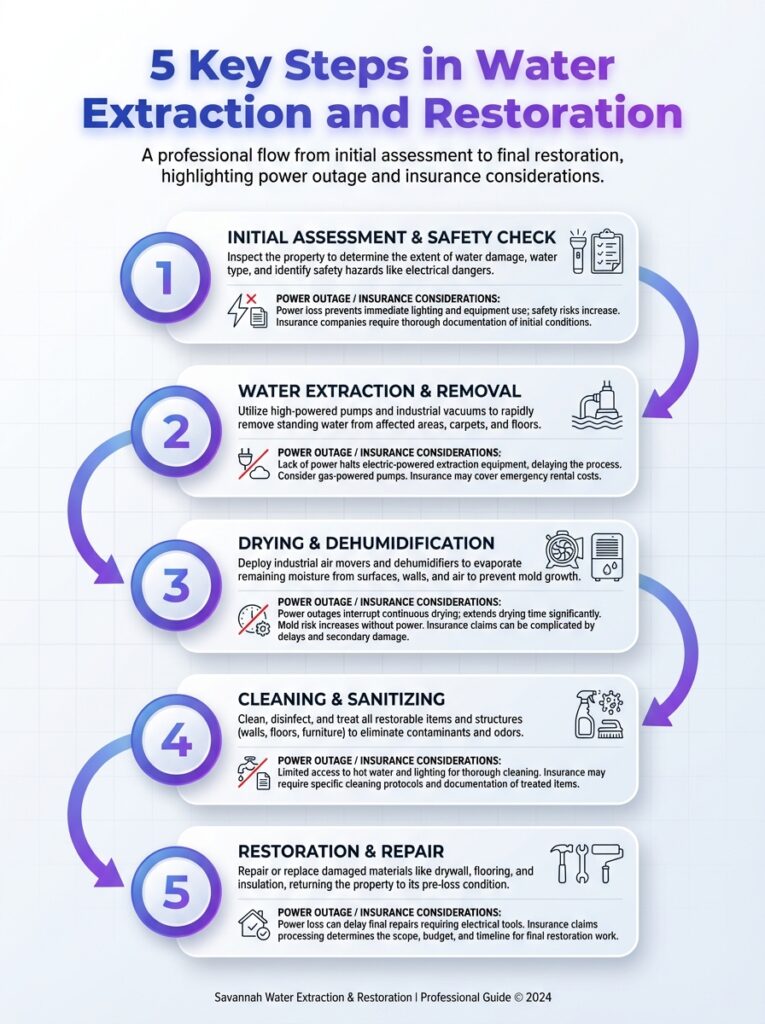
This infographic outlines the five key steps in water extraction and restoration. It emphasizes considerations during power outages in Savannah.
Did You Know?
In 2024, Savannah-area water facilities treated about 57.5 million gallons on a single day, operating near their current 58-million-gallon-per-day capacity, which shows how little slack there is in the system during major storms and outages.
Water Extraction, Floodwater, And Insurance Coverage During Outages
When outages follow storms, many homeowners ask a critical question: will my insurance cover water extraction and cleanup. The answer depends heavily on how the water entered your home and what type of policy you carry.
We help our Savannah clients sort through these details early so they can make sound decisions about mitigation and restoration steps.
Water Damage Versus Flood Damage In Savannah
Most standard homeowners policies cover sudden and accidental water damage from inside your home, such as burst pipes or appliance failures. They typically exclude rising water that enters from outside, which insurers classify as flood damage.
That distinction matters during power outages because both kinds of losses often happen at once. For example, a tree-limb impact can break a line in your attic while street flooding sends water through ground-level doors.
Where Water Extraction Fits Into Coverage
For covered water-damage events, professional extraction and structural drying are usually included as part of the claim, subject to your deductible. In Georgia, common deductibles range from $500 to $2,500 as flat amounts, or 1 to 5% of your home value for certain perils.
For floodwater, only a separate NFIP or private flood policy can typically pay for mitigation services. Those policies have their own limits and deductibles, and we often see homeowners combine both homeowners and flood claims after major coastal storms.

Preparing Your Savannah Home For Water Damage During Future Outages
Planning ahead is one of the most effective ways to limit loss from water damage when the grid goes down. We encourage homeowners to think in terms of both physical preparation and insurance preparation.
A well-thought-out plan does not prevent storms, but it can shorten the time your home spends wet and vulnerable.
Physical Readiness: Power, Drainage, And Storage
- Consider a properly sized portable generator or permanent standby unit to power sump pumps, a few circuits, and essential extraction gear.
- Keep gutters, downspouts, and yard drainage clear so that heavy rains move away from your foundation as quickly as possible.
- Store critical belongings in plastic bins on raised shelves or racks, especially in basements, garages, and ground-level storage rooms.
These basic steps reduce the volume of water that enters and the value of items exposed when water rises. That makes both manual and professional extraction more efficient if a storm hits.
Insurance Readiness: Deductibles And Policy Gaps
In Georgia, average homeowner premiums often fall between $2,004 and $2,435, and many Savannahians accept higher deductibles to keep those premiums down. In a large water loss, that can mean a significant out-of-pocket bill during a stressful time.
Reviewing your deductibles and considering flood coverage before hurricane season starts can prevent unpleasant surprises. We often see gaps where homeowners believed flood was included and only discover the exclusion after a storm-related outage and water intrusion.

Historic Savannah Homes: Special Water Extraction Concerns In Outages
Savannah’s historic homes are part of what makes the city unique, but those properties often suffer disproportionately when storms and power outages combine. Older framing, plaster, brick, and heart-pine floors react very differently to prolonged moisture than modern materials.
During outages, any delay in extraction and drying can affect original features that are difficult and expensive to replace.
Common Water Intrusion Patterns In Older Structures
Historic properties may have aging roofs, single-pane windows, and unsealed crawlspaces that allow water and humid air to enter quickly. Foundation vents and porch structures can become pathways for standing water during heavy rainfall and storm surge.
Once inside, water can travel behind plaster, into decorative woodwork, and through layered flooring assemblies. During a power outage, those pathways are often harder to spot and dry promptly.
Why Specialized Coverage Matters After An Outage
Standard replacement policies often assume modern materials and methods, which can be very different from the original finishes in historic Savannah homes. Articles on historic coverage highlight that restoration cost gaps can exceed $200,000 when period-appropriate methods are required.
Ordinance or law coverage, and agreed-value coverage for irreplaceable features, can help fund proper restoration after water extraction is complete. We work with many owners to document original materials before storms so that any future claims are better supported.
Did You Know?
September 29, 2024, multiple Coastal Empire counties including Chatham, Bryan, Effingham, Glynn, Liberty, Long, McIntosh, Screven, and Wayne were placed under boil-water advisories after Helene because reduced pressure affected the safety of local water supplies.
Boil‑Water Advisories, Outages, And Safe Cleanup Practices
After major storms and outages, local utilities sometimes issue precautionary boil-water advisories. These advisories mean that municipal water may not meet normal safety standards until testing confirms otherwise.
For homeowners dealing with water extraction, this affects how you use tap water during cleaning and what you do when pressure drops significantly.
How Advisories Affect Water Extraction Work
If the system has low pressure or potential contamination, we avoid using tap water for rinsing surfaces or equipment until advisories are lifted. We may bring in clean water supplies for essential tasks or use products that do not require rinsing.
For private wells, outages and flooding can also affect pumps and water quality. In these cases, we encourage clients to follow local guidance on testing and any recommended precautions.
Simple Precautions For Homeowners
- Monitor local news and official city channels for advisory updates while you are dealing with water damage.
- Use bottled or otherwise confirmed safe water for drinking and food preparation until advisories are lifted.
- Follow all public instructions about flushing lines or other post-advisory steps.
These advisories are usually temporary, as seen in recent local examples where small areas returned to normal operation within a short period. Staying informed helps you clean up effectively without introducing new issues.
Working With Insurance Adjusters After An Outage‑Related Water Loss
When water extraction follows a storm and blackout, the claims process can feel complicated. There might be multiple causes of loss, partial coverage, and overlapping homeowners and flood policies.
We support our Savannah clients by providing clear documentation and helping them understand how adjusters evaluate outage-related water damage.
What Adjusters Typically Look For
- Evidence of when the water entered, including time-stamped photos or videos.
- Clear distinction between storm-driven floodwater and interior plumbing leaks.
- Receipts and work orders for emergency mitigation measures like extraction, drying, and temporary repairs.
Adjusters also review your policy language regarding power outages and storm-related deductibles. Detailed, organized information usually leads to smoother claim discussions.
How Our Documentation Helps Your Claim
We document moisture readings, equipment logs, and drying progress throughout the project. That record helps demonstrate that you took reasonable steps to prevent additional damage.
We can also coordinate site visits with your adjuster and answer technical questions about what we found. Our goal is to make sure the condition of your property is clearly presented so the claim can be evaluated fairly.
Coordinating With Local Restoration And Utility Teams In Savannah
During large-scale events, we are part of a broader network that includes utilities, municipal water departments, and other restoration providers. Good coordination helps the entire city recover more efficiently.
When power restoration is phased, we time our most electricity-intensive work to align with the grid coming back online in each neighborhood.
Why Utility Restoration Timelines Matter For Your Home
As Georgia Power improves reliability and installs more automated devices on the grid, outage durations are gradually shortening. That means we can begin full-scale extraction and structural drying sooner in many cases.
However, even a day or two without power during hot, humid weather can be enough for serious moisture-related damage. We design our response with those first hours in mind.
Communication You Can Expect From Us
We keep you informed about what work can safely proceed without power and what will wait until circuits are restored. You will know which rooms are our priority, how long extraction is expected to take, and what to avoid stepping on or moving.
We also let you know when adjusters or inspectors are scheduled so you can plan your time and access. Clear communication is one of the most effective tools for getting through an outage and restoration project with less stress.
Practical Checklist: Be Ready For Water Extraction During The Next Power Outage
Putting everything together, it helps to have a simple, written plan before the next hurricane season. That way, you are not trying to remember steps in the middle of the night as a storm moves through.
Use the checklist below as a starting point and customize it for your home, flood zone, and family.
Before Storm Season
- Confirm your homeowners and any flood policy details, deductibles, and coverage gaps.
- Identify your main water shutoff valve and ensure it is accessible.
- Consider backup power options for sump pumps and essential circuits.
- Elevate valuables and important documents above anticipated water levels.
During And Immediately After A Storm Outage
- Put safety first, especially around standing water and potential electrical hazards.
- Stop interior water sources if you can do so safely.
- Document damage with photos and videos, even in low light.
- Contact a professional water extraction team for guidance and response.
- Monitor local advisories about water usage and boil-water notices.
Conclusion
Water extraction during a power outage in Savannah is challenging, but with the right preparation and support it is manageable. Understanding how outages affect extraction equipment, insurance coverage, and city water systems helps you act quickly and confidently when minutes matter.
Our role is to bring expertise, equipment, and clear communication to your home at one of the most stressful moments of homeownership. With a practical plan in place before the next storm, you can protect your property more effectively and get back to normal faster after the power comes back on.