In a coastal city like Savannah, where 95% of local power was restored within six days after Hurricane Helene, fast hurricane damage restoration is the difference between a manageable repair and long-term, expensive destruction to your home.
Key Takeaways
| Question | Short Answer |
|---|---|
| What is the first step after hurricane damage in Savannah? | Document everything with photos and videos, then contact your insurer and a local restoration company like Savannah Water Damage Pros for emergency response. |
| Does homeowners insurance cover hurricane flooding? | Standard policies usually cover sudden internal water damage, not flood water from storm surge. Separate flood coverage is explained in our flood insurance vs homeowners guide. |
| How do I know if my hurricane damage is “water damage” or “flood damage”? | It depends on where the water came from. Our detailed Savannah water damage coverage guide breaks down the difference that insurers use. |
| What should historic homeowners in Savannah do after a hurricane? | Preserve original materials when possible and review your coverage, using tips from our historic home insurance water damage guide. |
| How can I manage the cost of hurricane repairs and deductibles? | Understand your deductible options and long-term strategies using our guide to lowering water damage deductibles. |
| What does my insurance adjuster actually do after a hurricane? | They document your loss and value the claim. Our article on working with insurance adjusters explains how to protect your interests. |
| What emergency water damage is covered right away? | Many policies cover sudden internal water damage but exclude external flooding, which we explain in our emergency coverage overview. |
Understanding Hurricane Damage Restoration In Savannah’s Coastal Environment
Hurricane damage restoration in Savannah combines water extraction, structural drying, debris removal, and careful documentation so your home can be returned to pre-storm condition as efficiently as possible.
Our coastal setting, historic housing stock, and low-lying neighborhoods mean that even a “glancing blow” from a storm can leave lingering moisture and structural issues that require professional attention.
Water Damage vs Flood Damage After a Hurricane
Insurers treat water that enters from a broken roof or window very differently from tidal flood water that moves across the ground, so how we describe and document the source of water during restoration is critical.
We align our on-site notes and photos with the distinctions explained in our internal coverage resources so your claim has the best chance of accurate handling.
Savannah’s Unique Hurricane Risk Profile
Many neighborhoods sit in mapped flood zones, so restoration planning often includes both interior water mitigation and exterior drainage and debris considerations.
We factor in recurring tidal patterns, groundwater levels, and historic construction types when assessing how deeply hurricane water has affected your structure.
Why Speed Matters In Post-Hurricane Restoration
In the first 24 to 48 hours after a storm, trapped moisture can spread rapidly into walls, subflooring, and built-in cabinetry, which increases the scope of demolition and rebuild if left untreated.
Our emergency crews focus on stabilizing the property quickly, which helps preserve materials, control costs, and support your insurance claim with clear documentation of necessary work.
Step‑By‑Step Hurricane Damage Restoration Process For Savannah Homes
Our hurricane damage restoration process in Savannah follows a clear sequence so you know what to expect and how each phase supports your insurance claim and long-term repairs.
Even though every property is different, the core steps remain the same from downtown historic townhomes to newer construction on the Southside.
1. Emergency Response And Safety Check
We start by confirming that the property is safe to enter, looking for obvious electrical hazards, structural instability, and visible ceiling sagging.
At this stage we also walk the exterior to note roof damage, broken windows, and any signs of ground-level flood intrusion that may affect coverage classification.
2. Detailed Damage Assessment And Documentation
Our team photographs every affected room, measures moisture in walls and floors, and notes the water line on drywall and exterior walls.
This initial documentation later supports the scope of work, repair estimates, and communications with your insurance adjuster.
3. Water Extraction And Structural Drying
We remove standing water with professional extraction equipment, then set up industrial fans and dehumidifiers to dry materials that can be saved.
In hurricane scenarios, we often focus first on lower levels and crawlspaces, since trapped storm water in these areas can cause long-term structural problems if ignored.
4. Controlled Demolition And Cleaning
Our technicians remove unsalvageable building materials in a controlled way, cutting drywall above the water line and lifting flooring where necessary.
We then clean exposed framing and surfaces with appropriate solutions so the structure is ready for rebuilding once fully dry.
5. Rebuild And Final Walkthrough
After drying is confirmed with moisture readings, we coordinate or perform rebuild services to restore walls, floors, and finishes to pre-loss condition based on your coverage and selections.
Finally, we walk through the property with you to confirm that the work aligns with the agreed scope and that any remaining punch-list items are addressed.
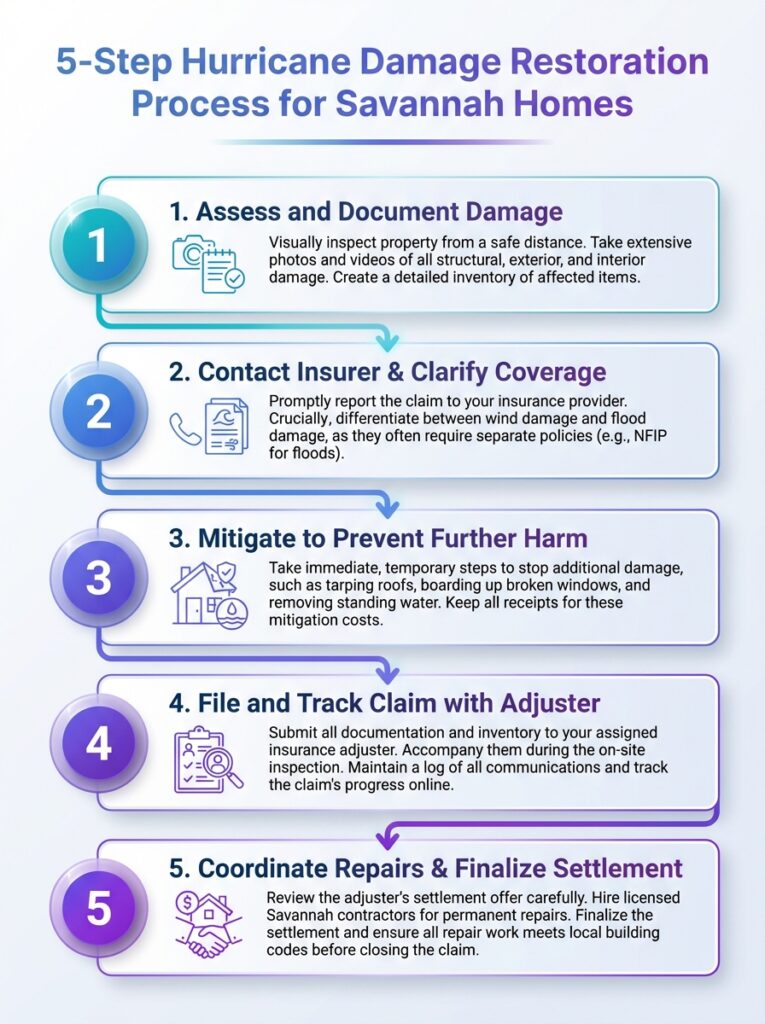
A visual guide to the 5-step hurricane damage restoration process for Savannah homes. It outlines each phase from assessment to rebuild.
Hurricane Damage, Flooding, And Insurance Coverage In Savannah
One of the most confusing parts of hurricane damage restoration in Savannah is how different policies respond to water from the same storm.
We help you understand these distinctions practically, so you can decide when to involve flood coverage and when a standard homeowners claim may apply.
How Insurers Define Flood vs Water Damage
Standard homeowners insurance often covers sudden and accidental water damage from events like roof punctures or broken windows during high winds, but excludes rising flood water that comes from outside and moves across the ground.
That external flooding typically falls under separate flood insurance, which many Savannah homeowners carry through NFIP or private carriers.
Why This Matters For Your Restoration Plan
If most damage is categorized as flood, the scope of covered repairs may rely on your flood policy limits and deductibles rather than the homeowners policy you might instinctively call first.
We align our estimates and work descriptions with the coverage paths available to you so that necessary mitigation and rebuild activities are correctly assigned.
Coordinating With Multiple Policies After A Major Storm
After a hurricane, some Savannah properties experience both wind-driven rain intrusions and ground-level flooding, which can trigger multiple coverages.
Our role is to clearly separate areas and materials affected by each type of water in our documentation, which makes it easier for insurers to process the claim and for you to understand out-of-pocket exposure.
Did You Know?
1,500+ trees on power lines had to be removed or addressed during the Helene response, highlighting how widespread debris and line damage can complicate neighborhood access after a storm.
Working With Insurance Adjusters After Hurricane Damage In Savannah
Insurance adjusters play an important role in hurricane damage claims, and how you coordinate with them can significantly affect your restoration timeline and approved scope.
We often interact with both company staff adjusters and, in some cases, public adjusters who represent the homeowner.
What Adjusters Look For On Site
Adjusters review visible damage, compare it with policy terms, and determine whether the cause of loss aligns with covered events such as wind-driven rain or excluded flood water.
They appreciate clear, well-organized documentation, which is why we provide detailed moisture readings, photographs, and itemized estimates when requested.
How We Support Your Claim
Our crews note dates, times, and observed conditions carefully so that adjusters can verify that mitigation began promptly and that no additional damage occurred from delays.
We also help you answer technical questions about materials, construction methods, and the necessity of certain repairs without speculating about coverage decisions.
Communication Tips For Homeowners
When meeting an adjuster, it helps to have your policy handy, a written list of concerns, and any receipts for emergency work like temporary tarping or board-up services.
We encourage you to walk the property with the adjuster, point out all affected areas, and avoid minimizing or exaggerating damage so that your claim file reflects an accurate picture.
Special Hurricane Considerations For Savannah’s Historic Homes
Historic homes in Savannah require special attention after a hurricane because original materials, construction methods, and preservation guidelines can significantly affect restoration choices.
Our goal is to respect the character of your property while stabilizing and repairing storm damage in a way that aligns with your coverage and any preservation requirements.
Common Hurricane Damage In Historic Structures
Older roofing materials, aged window frames, and brick or plaster walls can be more vulnerable to wind-driven rain and prolonged moisture exposure.
At the same time, many historic homes sit on raised foundations, which may change how flood water flows under or around the building compared with newer slab-on-grade homes.
Insurance Coverage Nuances For Historic Properties
Some policies for historic homes offer replacement-in-kind coverage for period-appropriate materials, while others default to modern equivalents that may not match existing finishes.
We document damaged features carefully so your agent and adjuster can determine how your specific policy responds to specialized restoration needs.
Balancing Preservation And Practical Restoration
In many cases we can dry and preserve original framing, trim, and other architectural details rather than replacing them, which retains value and character.
When replacement is unavoidable, we help plan for material selections that respect the home’s style and any local historic district guidelines.
Emergency Actions Savannah Homeowners Should Take Right After A Hurricane
There are practical steps you can take even before a restoration crew arrives that help protect your home and support a smoother recovery.
Safety comes first, followed by documentation and basic mitigation efforts that match conditions on site.
Immediate Safety And Utility Checks
Only enter your home if local authorities say it is safe and you do not see obvious hazards like downed power lines, strong gas smells, or major structural damage.
If you suspect electrical danger or see standing water near outlets or appliances, wait for professionals to evaluate before turning anything on.
Documenting Damage Thoroughly
Use your phone to take wide and close-up photos of every affected area, including water lines on walls, damaged contents, and outdoor debris impacts.
Record short video walkthroughs with narration, mentioning dates and observed conditions, since this can help jog your memory during later conversations with your insurer.
Basic Mitigation You Can Safely Perform
If the area is safe and your insurer allows it, you can place aluminum foil or blocks under furniture legs, move undamaged items to dry rooms, and start gentle ventilation by opening windows when conditions permit.
Avoid removing drywall or flooring yourself unless instructed, since premature demolition can complicate the documentation that adjusters rely on.
Managing Costs, Deductibles, And Out‑Of‑Pocket Expenses
Hurricane damage restoration often triggers wind, hurricane, or flood deductibles, which can be higher than the standard deductible shown on your homeowners policy.
Understanding how these deductibles work in Georgia helps you plan ahead and avoid surprises when the first estimate arrives.
Flat Versus Percentage‑Based Deductibles
Some Savannah homeowners have a flat-dollar deductible, while others carry a percentage-based deductible that is calculated from the insured value of the home.
That difference can be substantial, especially on larger or higher valued properties, so we encourage you to review those numbers with your agent before storm season.
Strategies To Reduce Long‑Term Costs
Our internal guidance highlights options like policy reviews, bundling, and adjusting coverage levels as ways to manage deductibles over time, which can be discussed with your insurance professional.
From a restoration standpoint, quick mitigation and targeted demolition can also help keep overall repair costs in check compared with deferred or piecemeal responses.
Planning For Uninsured Or Underinsured Damage
If part of your loss is not covered, such as certain exterior features or items below flood policy limits, we can prioritize repairs so you focus available funds on the most important structural needs first.
We also provide clear, itemized estimates so you can make informed decisions about optional upgrades or non-covered work while the home is already under repair.
Did You Know?
15,000+ personnel were engaged across the region in the Helene response, illustrating how many different teams may be working simultaneously to restore power, clear debris, and support property repairs.
Debris Removal, Structural Safety, And Neighborhood Access
Clearing debris and ensuring structural safety are essential parts of hurricane damage restoration in Savannah, especially when city streets and yards are filled with fallen branches and building materials.
These activities often occur alongside interior drying and cleaning, and they can affect when crews can access your property.
Handling Yard And Exterior Debris
After municipal crews address main roads and rights-of-way, homeowners still face damaged fences, scattered roofing, and vegetation on their own lots.
We coordinate our work with local guidelines for curbside debris placement and hauling so your cleanup progresses efficiently and safely.
Checking For Structural Concerns
Hurricane winds and flying debris can weaken roofs, porches, and exterior walls even if the damage is not obvious from the street.
Our assessments include looking for subtle signs like cracked masonry, shifted framing, and misaligned doors or windows that may indicate deeper issues.
Maintaining Safe Access For Crews And Residents
Clear walkways, driveways, and entry points allow restoration teams to move equipment in and out without delays or additional risk.
When larger obstructions remain, such as fallen limbs or partial building collapses, we help you plan for specialized removal before interior work continues.
Protecting Against Future Hurricane Damage In Savannah
Every serious storm highlights opportunities to reduce future risk, whether through insurance changes, physical upgrades, or updated preparedness plans.
We encourage Savannah homeowners to treat each hurricane event as a chance to strengthen both the property and the paperwork behind it.
Improving Your Property’s Resilience
After repairs, you might consider roof upgrades, better window protection, or improved drainage around the foundation to redirect water away during heavy rains and storm surge.
We can share observations from the restoration process about where water entered or collected so you can target improvements effectively.
Reviewing And Adjusting Coverage
Once your claim is resolved, it is a good time to discuss coverage limits, deductibles, and flood options with your insurance professional in light of what actually happened to your home.
Our documentation can help illustrate the real cost of repairs and the areas where additional protection might be useful in the future.
Building A Practical Hurricane Plan
A written checklist that includes who to call, how to shut off utilities, and where to store important documents makes a stressful situation more manageable.
We recommend keeping digital copies of your insurance policies, recent photos of your home, and a list of trusted local contractors in a secure, easily accessible place.
Conclusion
Hurricane damage restoration in Savannah is a coordinated effort that blends emergency response, technical drying and repair, careful documentation, and thoughtful planning for the future.
By acting quickly, understanding how your coverage responds, and working with local professionals who know Savannah’s climate and housing, you can navigate post-storm recovery more confidently and protect the long-term integrity of your home.