When a major storm hits the Georgia coast, thousands of flood and wind claims can follow, and in 2024 the National Flood Insurance Program handled 98,667 flood claims nationwide with an average payment of $33,905 per claim, which shows how high the stakes are when you file a hurricane insurance claim in Savannah.
Key Takeaways
| Question | Quick Answer |
|---|---|
| How do I start a hurricane insurance claim in Savannah? | Contact your insurer as soon as it is safe, document all damage with photos and videos, and take steps to prevent further damage. Then schedule professional inspection and mitigation services, like our emergency water damage team at Savannah Water Damage Pros. |
| Does my policy cover hurricane flooding in Savannah? | Most standard homeowners policies cover wind but do not cover flood. You typically need separate flood insurance for storm surge and rising water. |
| What documentation do I need for a hurricane claim? | Policy number, photos and videos of damage, a written inventory of damaged items, receipts for emergency repairs, and any prior appraisals or inspections. |
| How long do I have to file after a hurricane in Savannah? | Deadlines vary by insurer and by flood vs homeowners policies, but you should file within days, not weeks, to avoid disputes about the cause and extent of water damage. |
| Can I get help dealing with adjusters and documentation? | Yes. Local restoration contractors like us document moisture readings, structural damage, and itemized estimates that you can submit directly to your insurance company. |
| What if my hurricane insurance claim is denied or underpaid? | You can request a reinspection, submit additional evidence, and in some cases consult a public adjuster or attorney to review your coverage and claim history. |
| How can I reduce future hurricane claim problems in Savannah? | Review your policy limits and deductibles before hurricane season, keep updated photos and inventories of your property, and follow Savannah’s building and floodplain standards to reduce risk. |
Understanding Hurricane Insurance Claims in Savannah’s Coastal Climate
Living in Savannah means accepting both the beauty of the coast and the reality of hurricane season. When a storm hits, understanding the types of insurance that may apply is the first step to a successful claim.
Most homeowners policies here focus on wind and rain that enter through wind damage, while separate flood policies address storm surge and rising water. Knowing which policy to use can save weeks of confusion.
Wind vs Flood Damage In Savannah Claims
Insurers often separate wind-driven rain from water that rises from outside, such as flooding from the Savannah River or storm surge. In a large hurricane, many homes experience both types of damage at the same time.
For many families, this means filing two different claims, one on homeowners and one on flood. Clear notes and photos help you show which damage connects to which policy.
Local Risk Patterns That Impact Your Claim
Savannah’s low elevation and network of rivers and marshes increase the chance of flooding during tropical systems. Older homes in historic districts may also have aging roofs and foundations, which insurers can question if documentation is weak.
We always recommend that homeowners keep pre-storm photos of their roof, exterior, and interior finishes so they can show the “before” condition if adjusters raise wear and tear issues.
How Hurricane Insurance Works For Savannah Homeowners
When a hurricane targets Savannah, three main policies usually come into play, homeowners, flood, and sometimes windstorm coverage handled through a separate program or endorsement. Each policy has its own deductible, coverage limits, and exclusions.
We encourage clients to gather declarations pages for every active policy before hurricane season, then store digital copies in the cloud so they are easy to reach after a storm.
Homeowners Coverage Basics In Coastal Georgia
Homeowners policies typically address wind damage, such as roof shingles ripped off, broken windows, and rain that enters through those openings. They can also cover interior damage, personal belongings, and sometimes extra living expenses if your home is not safe.
However, many coastal policies have special hurricane or named-storm deductibles that are a percentage of your home value, not a flat dollar amount. This is important when you calculate whether to file a claim.
Flood Insurance For Storm Surge And Rising Water
Flood insurance, whether through NFIP or a private insurer, usually applies to water that comes from outside and rises on the ground. In Savannah’s low-lying neighborhoods, this can include storm surge, river flooding, and heavy rainfall that overwhelms drainage.
Policy limits for structures and contents are often separate, so you will want to understand how much coverage you have for each. Contents coverage is especially important for ground-level or basement storage areas.
Why Coverage Gaps Matter In Savannah
Many coastal residents learn after a storm that their homeowners policy does not cover the kind of water damage they have. This is particularly common in areas that flood for the first time in many years.
Understanding your coverage now can help you decide whether to add or increase flood protection before the next hurricane season starts.
Step 1: Immediate Actions After A Hurricane Hits Savannah
Once conditions are safe and local authorities allow travel, your first moves after a hurricane can protect both your home and your future claim. Fast, careful action can prevent secondary damage and disputes.
We always remind homeowners to prioritize safety and never enter a severely damaged or flooded building until officials consider it safe.
Protecting Your Property And Yourself
Start by shutting off electricity and gas if you can safely do so and if you suspect water inside the home. Avoid standing water that may hide sharp objects or present electrical hazards.
Then, take wide-angle photos of your home from all sides before moving anything. These images help show the immediate post-storm condition.
Documenting Damage For Insurance From Day One
Walk through each room and capture photos and video of floors, walls, ceilings, and contents. Speak aloud in your video, describing the room, the damage, and any standing water levels.
Do not throw away damaged items yet unless they pose a hazard. Instead, group them, photograph them, and create a simple list of what was damaged.
Calling For Emergency Water Damage Help
In Savannah, standing water and soaked materials can quickly cause additional issues if not addressed. Contact a professional water damage restoration team as soon as you finish your first round of photos.
Our crews handle water extraction, structural drying, and moisture mapping, and we document every step so you can show your insurer exactly what happened and when.
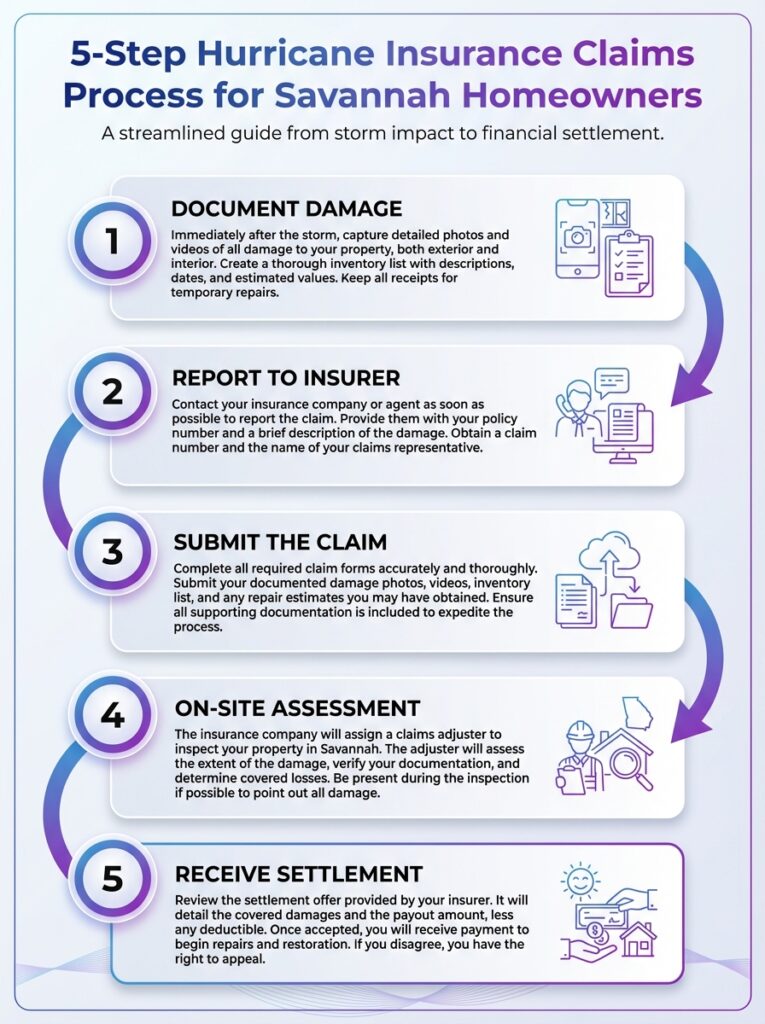
This infographic guides Savannah homeowners through the 5-step hurricane insurance claims process. It highlights key steps, required documents, and tips to streamline claims.
Step 2: Filing Your Hurricane Insurance Claim In Savannah
Once you gather basic documentation, you should contact your insurers as soon as possible. High claim volume after a major storm often leads to delays, so getting in line early helps.
Have your policy numbers ready, along with a short description of what happened and when you discovered the damage.
How To Contact Your Insurers Efficiently
Most companies allow you to file using a 24/7 phone line, website portal, or mobile app. Use whichever method lets you upload photos and documents easily.
Ask for a claim number for each policy and write it down in multiple places. You will use that number on every call and email.
Information To Provide In Your Initial Claim
Be clear and factual about the cause of loss, such as “Hurricane-related wind that damaged the roof and allowed rain into the living room” or “Storm surge flooding from the river that reached 18 inches inside.”
Explain whether you have taken any protective steps, such as tarping the roof or arranging emergency water extraction, and let them know if your home is uninhabitable.
Coordinating With Your Restoration Contractor
If we are already on site, we can help provide moisture readings, affected area maps, and initial estimates. This information often speeds up adjuster approval for mitigation work.
Keep copies of all agreements and invoices, since many policies reimburse reasonable emergency services that prevent further damage.
Did You Know?
Georgia-specific average Helene flood claim: $14,538.
Step 3: Working With Adjusters On Hurricane Claims In Savannah
After you file, your insurer assigns an adjuster who will inspect your home and estimate the loss. Preparing for that visit can make a significant difference in the outcome.
We often coordinate our schedule with adjusters so they can see moisture readings, hidden damage, and opened walls if demolition has begun.
Preparing For The Adjuster’s Inspection
Gather your documentation in a simple folder, including photos, videos, damaged item lists, and any contractor estimates. Walk through your home before the adjuster arrives and note every damaged area you want to discuss.
During the visit, stay present if possible and calmly point out both obvious and less visible damage, such as warped flooring or water stains in closets.
Common Issues In Savannah Hurricane Inspections
In coastal storms, adjusters often spend extra time separating wind damage from flood damage. Roof damage, siding impacts, and broken windows usually fall on the wind side, while standing water indoors often triggers flood coverage questions.
Historic homes can present additional complexities around older materials and finishes. Detailed contractor estimates help clarify realistic repair costs.
Keeping A Written Record Of All Contacts
After every call or meeting with the adjuster, jot down the date, time, and key points discussed. This record can be useful if your claim experiences delays or disagreements later.
Whenever possible, send follow-up emails summarizing decisions, such as approval for tear-out, structural drying, or temporary housing coverage.
Step 4: Documenting Water, Mold, And Structural Damage For Your Claim
Hurricane damage in Savannah often includes hidden moisture inside walls, under flooring, and in crawlspaces, which insurers might miss if there is no professional documentation. Our job is to uncover that damage and record it clearly.
Thorough documentation supports both your initial claim and any supplemental claims if additional issues appear during repairs.
Professional Moisture Mapping And Photos
We use moisture meters and thermal imaging to locate wet areas that may look dry on the surface. Then we photograph readings and create diagrams that show the extent of the affected structure.
These maps help adjusters understand why certain materials need removal, such as baseboards, drywall, or insulation.
Capturing The Full Scope Of Damage
During demolition and drying, we continue to photograph each phase, including exposed framing, subfloors, and any discovered structural issues. This creates a timeline from initial loss through mitigation.
We also keep copies of equipment usage logs, which show how long drying equipment operated. Many policies reimburse for this when it prevents further deterioration.
Why Detailed Itemization Matters
When you list damaged personal property, be as specific as possible with brands, approximate purchase dates, and estimated costs. Even simple household items add up quickly.
A spreadsheet or checklist can help you avoid leaving out important items that contribute to your total claim value.
Did You Know?
Georgia disaster counties show FEMA flood insurance uptake at 8.5% nationwide; excluding Chatham County, 0.7%.
Step 5: Understanding Payouts, Deductibles, And Disputes
Once your insurer completes its estimate, you receive one or more payment offers that reflect your coverage and deductibles. Knowing how these numbers work can help you decide on next steps.
In Savannah, many policies use percentage-based hurricane deductibles, which can surprise homeowners if they have not reviewed their declaration pages recently.
Actual Cash Value vs Replacement Cost
Some policies pay the depreciated value of items first, then release additional funds as you complete repairs and replacements. That structure is important for planning your repair budget.
Ask your insurer to explain how they calculate depreciation for building materials and personal property so you can verify their math.
Handling Disagreements On Scope Or Pricing
If the insurer’s estimate seems too low to complete proper repairs, you can request a reinspection or submit a detailed contractor estimate for comparison. We often work directly with adjusters to review line-by-line differences.
Keep your communication professional and focused on facts, such as code requirements, manufacturer installation specs, and comparable local pricing.
Supplemental Claims And Ongoing Issues
As work progresses, contractors sometimes discover additional hurricane-related damage, especially inside wall cavities or roofing systems. In that case, you may file a supplemental claim.
Document these issues with new photos and detailed notes about when and how they were discovered, then send them with an updated estimate.
Local Factors That Affect Hurricane Insurance Claims In Savannah
Coastal regulations, building codes, and local floodplain rules all influence how hurricane damage is repaired and how claims are evaluated. Savannah has made several updates that property owners should know about.
These factors can affect both your current claim and your future insurance costs.
Floodplain Regulations And Freeboard Requirements
The City of Savannah now requires two feet of freeboard above base flood elevation for new structures in the 100-year floodplain. This higher elevation helps reduce flood risk.
In some cases, substantial damage may trigger elevation requirements or other code upgrades, which may or may not be fully covered by insurance depending on your endorsements.
Historic District Considerations
Homes in Savannah’s historic areas often require specific materials and methods for repair. This can increase costs and extend timelines.
When possible, obtain estimates from contractors who understand historic guidelines so you can show insurers realistic repair costs for your specific property type.
Coastal Market Pressures On Claims
Regional storms across Georgia and nearby Florida can influence how quickly insurers handle claims, since they may be processing tens of thousands of losses at once. That can lead to longer wait times.
Staying organized and following up regularly can help keep your claim moving in a busy post-hurricane environment.
How Professional Water Damage Restoration Supports Your Claim
Professional mitigation is about more than drying your home, it also builds a clear, documented story of your hurricane loss. This story is often what insurers rely on when deciding what to cover.
Our team in Savannah focuses on both technical drying and detailed reporting, since both are critical for a smooth claim.
Emergency Response And Documentation
We typically respond 24/7 in the Savannah area to extract water, stabilize structures, and install drying equipment. Along the way, we log humidity levels, moisture readings, and drying progress.
These logs, paired with time-stamped photos, help prove that your actions were timely and reasonable under policy language.
Communicating Directly With Insurance
With your permission, we can share estimates and reports directly with your adjuster or claims representative. This often reduces back-and-forth questions about what needs to be done and why.
Clear communication between contractor, homeowner, and insurer is one of the best ways to avoid misunderstandings that delay payment.
Preventing Unnecessary Secondary Damage
Prompt mitigation helps limit further deterioration of building materials and contents. Insurers typically expect you to take these steps as part of your duty to protect the property.
By acting early, you not only protect your home but also reduce the risk that an insurer will argue some damage occurred because of delayed action after the storm.
Common Pitfalls In Hurricane Insurance Claims (And How Savannah Owners Avoid Them)
After severe storms, many homeowners across the Southeast discover the same recurring claim problems. Knowing them now allows you to plan around them.
We regularly see a few avoidable mistakes in Savannah that can cost property owners both time and money.
Waiting Too Long To File Or Mitigate
Delays in reporting damage or starting water extraction make it harder to show that the hurricane caused the full extent of the damage. Insurers may then question coverage or reduce payments.
Filing promptly and arranging mitigation quickly are two of the strongest steps you can take to protect your claim.
Insufficient Documentation And Inventories
Relying on memory weeks after a storm often leads to incomplete damage lists. That can leave significant losses out of your claim.
Instead, take more photos than you think you need and start your itemized inventory as soon as you can safely walk through the property.
Accepting The First Offer Without Review
Initial payment offers are not always final, especially if new issues appear during repairs. Some homeowners accept them quickly without comparing them to contractor estimates.
Before you sign any final settlement documents, review the scope, pricing, and policy language, and request clarification where needed.
Preparing Now For The Next Hurricane Season In Savannah
The best time to improve your hurricane claim outcome is before a storm ever forms. A few preparation steps can significantly reduce stress and losses later.
We encourage our Savannah neighbors to treat pre-season planning as part of basic home maintenance.
Reviewing Policies And Coverages Annually
Each year, look at your homeowners, flood, and any additional windstorm policies. Check coverage limits, deductibles, and special exclusions for hurricanes or named storms.
If your home value or contents have increased, speak with your agent about adjusting limits to match your actual risk.
Creating A Home Inventory And Photo Archive
Walk through your home with your phone and record each room, including closets and storage spaces. Store these files in a secure cloud service.
This visual record can be invaluable if you ever need to prove the pre-loss condition of your home and contents.
Building Your Local Response Team
Before hurricane season, identify your preferred local restoration company, roofing contractor, and insurance agent contact. Keep their information in both digital and printed form.
Having trusted professionals ready to call means you spend less time searching for help when storms threaten the Savannah area.
Conclusion
Hurricane insurance claims in Savannah can be complex, but a clear process makes them manageable. When you understand your coverage, act quickly after a storm, and document every step, you give yourself the best chance of a fair and timely settlement.
As local water damage restoration professionals, we are here to help you stabilize your property, protect your family home, and navigate the documentation your insurer needs. With preparation, teamwork, and calm, informed decisions, Savannah homeowners can face hurricane season with greater confidence.