Savannah sits in a coastal state that has faced 134 billion‑dollar weather disasters since 1980, including 27 tropical cyclones, so historic homes here must be planned and ready long before the wind and water arrive. In this guide, we walk through practical, Savannah‑specific hurricane preparedness steps that protect both your property and its historic character.
Key Takeaways
| Question | Short Answer |
|---|---|
| Do standard homeowners policies cover hurricane flooding in Savannah historic homes? | No. As we explain in our flood vs homeowners insurance guide, standard policies usually exclude flood and storm surge, which are common in hurricanes. |
| What special coverage do historic homes need for hurricane damage? | Many historic homes need replacement‑in‑kind and ordinance or law coverage, as we cover in detail in our Savannah historic home insurance article. |
| How can Savannah owners understand water vs flood damage in policies? | Our water damage coverage guide explains why “sudden and accidental” water damage is treated differently from rising flood water. |
| What should I know about emergency coverage after a hurricane? | Some policies pay for immediate mitigation, such as water extraction and drying, which we outline in our emergency water damage coverage guide. |
| How do I avoid claim problems on my historic home after a storm? | Thorough documentation and knowing how adjusters work is key, as described in our guide to working with insurance adjusters. |
| Where can I find more Savannah‑specific preparedness information? | Our Savannah Water Damage Pros home page links to multiple local guides on water, flood, and insurance topics relevant to hurricane season. |
1. Why Hurricane Preparedness Matters So Much For Savannah’s Historic Homes
Historic districts like the Landmark District, Ardsley Park, and Victorian District combine age, unique construction, and coastal exposure, which makes hurricane planning essential. Many of these homes sit in lower elevations and older drainage areas that are especially vulnerable to wind‑driven rain, storm surge, and sewer backups.
Georgia’s disaster history shows that tropical cyclones account for a large share of total costs in recent decades, so we treat hurricane preparedness as a year‑round task, not just a last‑minute scramble. For historic homes, the goal is to protect life first, then minimize water intrusion and preserve irreplaceable materials and details.
Older roofing, original wooden windows, and pier‑and‑beam foundations can be surprisingly resilient when maintained correctly, but small weaknesses often lead to major water damage in a hurricane. Our job is to help you identify those weak points now so you are not surprised during the next storm.
We also focus on how hurricane preparation interacts with your insurance coverage, especially for water and flood damage, because the financial impact often lingers long after the storm clouds clear.
2. Understanding Savannah Hurricane Risk: Wind, Flood, And Historic Fabric
The 2025 Atlantic hurricane season forecast for our region includes 17 named storms and 4 major hurricanes, so Savannah homeowners should expect active seasons and plan accordingly. For historic properties, that means planning for both high winds and significant water, including storm surge and intense rainfall.
Wind can strip shingles, damage chimneys, and open up roof lines that were never designed for modern hurricane forces. Once wind compromises the building envelope, wind‑driven rain and debris can quickly damage plaster walls, original heart‑pine floors, and decorative trim that are difficult and expensive to replace.
Flood risk is equally important, especially in lower‑lying parts of the city and near tidal rivers and marshes. We encourage every homeowner to check their FEMA flood zone and understand how storm surge and heavy rain could affect their street, foundation, and crawlspace.
Finally, we look at the “historic fabric” of your property, including original materials and features that may require specialized repair methods after hurricane damage. This understanding shapes both your physical preparation and your insurance strategy.
3. Insurance Basics For Hurricane And Water Damage In Savannah Historic Homes
Many homeowners first discover water damage coverage gaps only after a hurricane or tropical storm hits. Standard homeowners policies typically cover “sudden and accidental” water damage that originates inside the home, such as a burst pipe, but they usually exclude flooding and storm surge from outside.
Flooding from rising water, tidal overflow, or storm surge usually requires a separate NFIP or private flood insurance policy. In Savannah’s coastal setting, we view flood coverage as essential for most historic homes, especially those in special flood hazard areas or close to waterways.
For a deeper dive into how water damage and flood coverage interact, we recommend reviewing your policy with a qualified insurance professional familiar with Savannah’s historic districts.
We also pay close attention to policy endorsements that are especially important after hurricanes. These can include sewer and drain backup coverage, mold endorsements, and additional living expense coverage for extended repairs to historic materials.
Understanding these basics long before storm season helps you make better choices about deductibles, coverage limits, and documentation, so you are not scrambling after a major event.
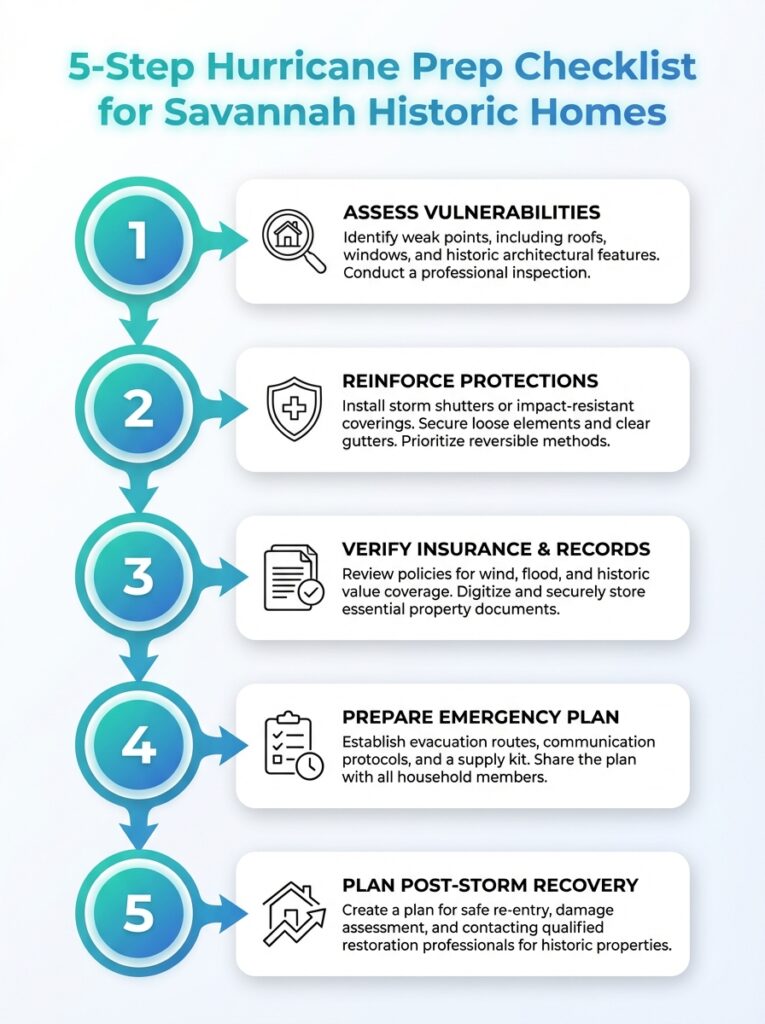
A simple, visual 5-step hurricane prep checklist tailored for Savannah’s historic homes. Protect heritage properties during storms with practical steps.
4. Special Insurance Needs For Savannah Historic Homes
Historic homes often need coverage that goes far beyond a standard replacement cost policy. Many carriers offer replacement‑in‑kind provisions or endorsements that help pay for period‑correct materials, such as heart‑pine floors, custom millwork, or slate roofing, instead of generic modern substitutes.
We also look for ordinance or law coverage, which helps pay for code upgrades required during repairs, including structural reinforcement or elevation work that may be triggered after hurricane damage. In older neighborhoods, code updates can represent a large portion of the total repair cost.
Some historic properties may benefit from agreed‑value or extended replacement cost coverage. These options can help address the gap between typical construction costs and the actual expense of restoring a historic building after significant hurricane damage.
Before storm season, we encourage owners to sit down with their agent and review policy language specific to historic structures. Clarifying these items in advance helps avoid disputes and delays when you file a claim after a hurricane.
Did You Know?
In 2024, more than 17,000 properties earned a FORTIFIED designation for hurricane resilience, bringing total designations to over 70,000 across 31 states and averaging about 1,400 new designations every month.
5. Physical Hurricane Preparations Tailored To Historic Structures
Physical preparation for a hurricane starts with the building envelope, especially the roof, windows, doors, and crawlspace or basement. On historic homes, we work to balance protection with preservation so that temporary measures do not damage original features.
Key steps include inspecting and repairing loose shingles or flashing, reinforcing chimneys, and ensuring gutters and downspouts are clear so they can handle intense rainfall. Where appropriate, we recommend adding hurricane straps or clips during roof work to improve wind resistance while keeping changes minimally visible.
- Install and test shutters or removable window protection that do not harm window frames.
- Seal gaps around doors and windows to reduce wind‑driven rain intrusion.
- Elevate mechanicals and valuables in basements or crawlspaces where feasible.
We also advise securing exterior features such as porch railings, decorative brackets, and fencing that might loosen under high winds and cause secondary damage. Every home is different, so a detailed pre‑season inspection is one of the best investments you can make.
Finally, we prepare for post‑storm drying and cleanup by knowing where utilities enter the building and how to safely shut them off before flood water or wind causes serious interior damage.
6. Documenting Your Historic Home Before Hurricane Season
The quality of your pre‑storm documentation often determines how smoothly your insurance claim goes after a hurricane. For historic homes, detailed records also help you justify the cost of specialty materials and preservation‑minded repairs.
We recommend creating a digital inventory that includes high‑resolution photos and videos of each room, exterior elevations, and close‑ups of distinctive features like plaster medallions, staircases, and original windows. Store copies both locally and in secure cloud storage in case your devices are damaged.
- Record serial numbers for mechanical systems and appliances.
- Scan or photograph prior appraisals, architectural plans, and preservation reports.
- Keep policy declarations and important contacts in a grab‑and‑go folder.
Documentation should also include any recent maintenance or upgrades, such as roof repairs or drainage improvements, since this can support your position if coverage questions arise. After a hurricane, adjusters often rely heavily on pre‑loss condition evidence to assess what was damaged.
By organizing these materials now, you reduce stress during evacuation and give yourself the best chance at a fair and timely settlement.
7. Emergency Response During And Immediately After A Hurricane
When a hurricane warning is issued for Savannah, life safety always comes first. Follow local evacuation guidance, especially in flood‑prone zones, and never stay in a home that emergency managers classify as unsafe.
If you return after the storm and find damage, your priorities are to document conditions, prevent further damage where it is safe, and notify your insurance carrier promptly. Many policies require you to take reasonable steps to mitigate additional losses, even before an adjuster arrives.
- Take wide and close‑up photos of every affected area before moving items.
- If safe, stop active leaks and remove standing water from easily accessible areas.
- Avoid turning on electricity in flooded spaces until a professional confirms it is safe.
Our emergency water damage guidance emphasizes early drying and moisture control to protect wood floors, framing, and plaster from progressive damage. Quick action often makes the difference between restorable materials and full replacement.
For historic homes, we urge owners not to discard damaged architectural elements without first documenting them and, where possible, consulting with both their carrier and a preservation‑minded contractor.
Did You Know?
Hurricane Helene in September 2024 damaged more than 5,000 power poles, over 9,000 spans of wire (around 425 miles), and 500-plus transformers across Georgia, highlighting how long outages can slow recovery for historic homes.
8. Working With Insurance Adjusters After Hurricane Damage
Once you file a claim, an insurance adjuster becomes your primary point of contact for evaluating hurricane damage. Their job is to assess what happened, determine how your policy applies, and estimate repair costs.
For historic homes, it is important to walk the adjuster through the property and point out distinctive materials, prior restoration work, and any pre‑existing issues you already had documented. This helps them distinguish storm damage from age‑related wear.
- Provide your pre‑storm photos and any professional reports.
- Request that estimates reflect period‑appropriate materials when your policy allows.
- Keep notes from every conversation, including dates and names.
Some owners choose to work with a public adjuster who can advocate on their behalf, especially in complex historic property claims. Whether you use a public adjuster or work directly with the carrier, clear communication and detailed documentation are your strongest tools.
We work alongside many homeowners during this process, helping them understand technical moisture readings, repair scopes, and how restoration decisions may affect historic elements and future insurability.
9. Financial Preparedness: Deductibles, Reserves, And Long‑Term Planning
Hurricane preparedness for Savannah historic homes includes financial planning, not just physical and insurance steps. Many policies carry separate wind or hurricane deductibles that can be higher than standard deductibles, and some are percentage based on dwelling value.
We encourage owners to understand these deductibles clearly and to set aside reserves accordingly. If your deductible is several thousand dollars, it is wise to have savings or a dedicated home repair fund ready before storm season.
- Review whether your water damage deductible is flat or percentage based.
- Ask your agent how hurricane or named‑storm deductibles apply in your policy.
- Consider how preventive upgrades might help negotiate better terms over time.
Some insurers may reward risk‑reduction measures, such as roof upgrades or improved drainage, with more favorable deductibles or premium options. Although these programs vary, it is worth discussing them as part of a long‑term strategy for your historic property.
By tying together physical hardening, strong documentation, and intentional financial planning, you place your home in a much stronger position for the next major storm.
10. Coordinating With Local Resources And Preservation Guidance
Savannah homeowners do not have to navigate hurricane preparedness alone. Local emergency management agencies provide hurricane guides, evacuation maps, and seasonal updates that help you plan timing, routes, and protective measures for your neighborhood.
State preservation agencies and local historic commissions also publish guidance on how to protect and repair historic resources after disasters. These materials can help you choose appropriate materials and methods for any hurricane‑related repairs.
Tip: Before storm season, confirm how to contact your local preservation commission and what approvals may be needed for exterior repairs after a hurricane.
We also recommend networking with neighbors, especially in dense historic districts, to coordinate shared preparations such as sandbagging, debris removal, and watch programs during hurricane season. A coordinated response can reduce damage and speed recovery on entire blocks.
Finally, keep an updated list of trusted contractors who understand both moisture control and historic construction. Having the right team ready can save weeks of delay when many homeowners are seeking help at the same time after a major storm.
Conclusion
Hurricane preparedness for Savannah’s historic homes is about more than boarding up windows at the last minute. It combines a clear understanding of wind and flood risks, specialized insurance coverage for historic structures, thoughtful physical hardening, and detailed documentation before every storm season.
By planning now, you protect not only your investment but also the historic character that makes Savannah unique. Our goal is to help you face each hurricane season with a practical plan, strong coverage, and confidence that your home is as ready as possible for whatever the Atlantic sends our way.