About 135 square miles around Savannah are already at risk of flooding during high tide today, and that number is expected to climb to about 184 square miles by 2050, which means more neighborhoods and more homeowners will feel the impact of Savannah River flooding in the years ahead.
Key Takeaways
| Question | Short Answer |
|---|---|
| How serious is Savannah River flooding for homeowners? | River flooding already affects neighborhoods across Chatham County, and the area at risk is projected to grow significantly by 2050. Staying prepared and knowing who to call, like our local team at Savannah Water Damage Pros, is critical. |
| What causes Savannah River flooding in residential areas? | Heavy rainfall, tropical systems, high tides, and overburdened drainage all contribute. Events like Tropical Storm Debby, which dropped about 10 inches of rain in two days, show how quickly conditions can overwhelm homes. |
| Are local authorities improving flood protection? | Yes. Savannah has received over $125 million in funding for stormwater projects and is upgrading infrastructure to better protect homes from flooding. |
| How can homeowners reduce damage from Savannah River flooding? | Combine elevation, proper drainage, regular maintenance, and a response plan. Professional water extraction, drying, and cleanup after an event can significantly reduce long‑term damage. |
| Do I really need flood insurance if I live near the Savannah River? | Homes in or near floodplains face a higher risk of damage. Programs like NFIP and potential Community Rating System (CRS) discounts can make coverage more affordable. |
| What should I do immediately after river flooding in my home? | Stay safe, shut off power if it is safe to do so, document damage, contact your insurer, and call a certified local restoration team for emergency water removal and drying. |
| Is Savannah changing building rules for flood‑prone areas? | Yes. The City adopted a two‑foot freeboard requirement above base flood elevation in the 100‑year floodplain starting January 1, 2025, which affects how new homes and major renovations are built. |
Understanding Savannah River Flooding And How It Impacts Homeowners
Savannah River flooding is not just a coastal issue, it affects inland neighborhoods whenever heavy rain, high tide, and river levels align. We see this first‑hand when swollen canals, ditches, and groundwater push water into streets, yards, and living spaces.
During recent events like Tropical Storm Debby, 37 homes in Tremont Park flooded and rescues were needed, which shows how fast conditions can shift from concern to emergency for homeowners.
Why The Savannah River Puts Homes At Risk
The Savannah River, nearby marshes, and a relatively flat landscape mean water can spread quickly once the river or drainage system is overwhelmed. When tide levels are high, water that should be draining to the river can instead back up toward residential areas.
For homeowners, this often looks like water creeping into crawlspaces, garages, and ground floors well before the river itself appears to be close to your property.
Common Flooding Scenarios We See Around Savannah
We regularly respond to homes affected by a combination of heavy rain and poor drainage, especially in older neighborhoods with aging infrastructure. We also see river flooding combine with storm surge during tropical systems, pushing water into areas that rarely see standing water otherwise.
Basement seepage, flooded crawlspaces, and soaked first floors are the most common damage patterns when the Savannah River and local drainage system are under stress.
How Local Infrastructure Affects Savannah River Flooding At Your Home
Homeowners often feel flooding as a very personal problem, but much of it is shaped by regional stormwater infrastructure. Savannah’s stormwater system includes about 416 miles of pipe, 147 miles of canals and ditches, 6 pump stations, 31 tide gates, around 14,000 catch basins, and 6,200 manholes.
When the system works as intended, it moves stormwater away from homes and toward the river or marshes, but intense storms can still overwhelm even a large network like this.
Drainage Capacity Versus Extreme Weather
The city designs stormwater systems to handle about a 100‑year storm, roughly 12 inches of rain in 24 hours. Events like Tropical Storm Debby, with about 10 inches in two days and forecasts for more, can push that design to its limit, especially if high tide or river levels are already elevated.
For homeowners, this means your risk does not only depend on your distance from the Savannah River, but also on how well your nearby ditches, culverts, and pipes handle these surges.
Ongoing Upgrades And What They Mean For Your Property
Savannah has received over $125 million in funding for stormwater capital projects, and drainage upgrades tied to events like Debby now exceed $100 million in planned and ongoing work. These investments target known trouble spots and aim to reduce frequent street and neighborhood flooding.
About 60% of the city’s drainage system has been inspected to find pinch points, which helps prioritize which neighborhoods and structures need the most urgent support.
Weather Patterns, Tropical Systems, And Savannah River Flood Events
Most serious river flooding cases we respond to are triggered by tropical storms, stalled fronts, or days of persistent rain. Tropical Storm Debby is a recent example, with about 10 inches of rain falling over two days across the Savannah area.
When that kind of rainfall happens on top of already high water tables and full canals, the Savannah River and connected waterways become a direct risk to nearby homes.
How Heavy Rain And High Tides Work Together
If the river is already high during a storm, gravity‑based drainage slows down or reverses. Tide gates and pump stations help, but they have limits, especially in older or low‑lying neighborhoods.
We often see this combination create flooding far from the visible riverbank, in streets and properties that might not appear to be “riverfront” at all.
Looking Ahead To 2050 And Beyond
Projections that flood‑risk areas will grow from about 135 to 184 square miles by 2050 put more existing homes and future development in the risk zone. A Nature‑backed assessment that includes Savannah estimates 1,006 to 1,389 square kilometers of land will be exposed to relative sea‑level rise by 2050 across 32 U.S. coastal cities.
For homeowners, this long‑term outlook means that what feels like a rare event today may become more frequent over the life of your mortgage or your time in a home.
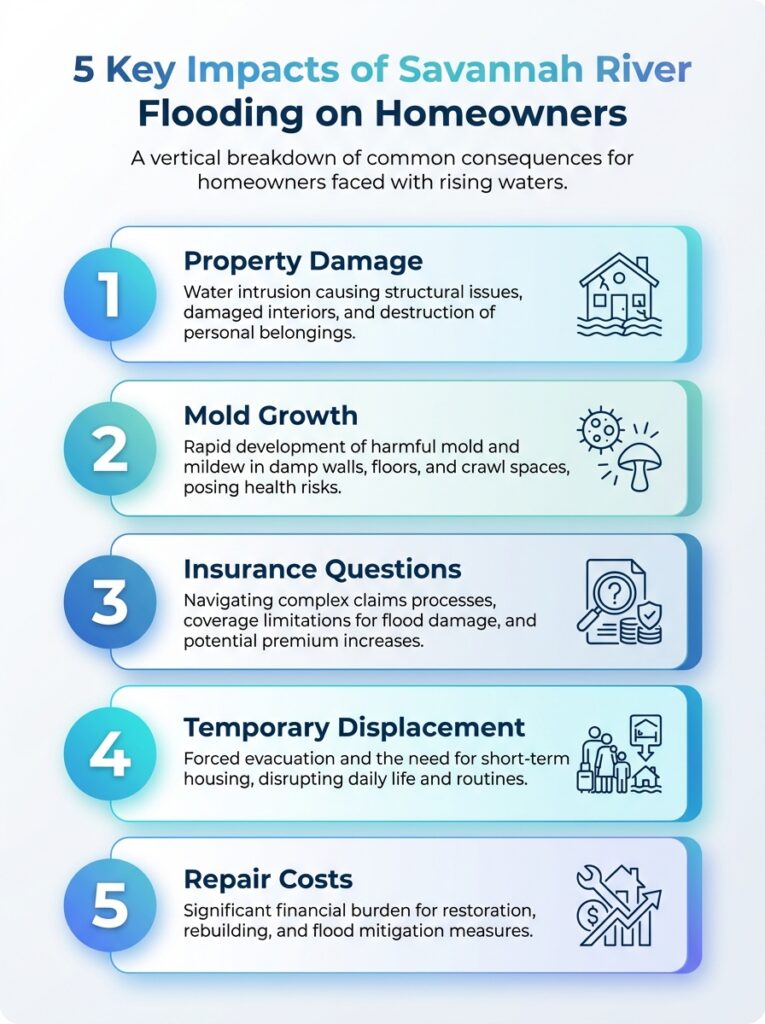
An infographic illustrating the five key impacts of Savannah River flooding on homeowners. It covers property damage, insurance considerations, repair costs, evacuation, and flood risk.
Did You Know?
Savannah has received over $125 million in funding for stormwater capital projects, a scale of investment that directly shapes how protected homeowners are from future flood events.
Building Codes, Elevation Rules, And What They Mean For Your Home
Local building codes are one of the strongest tools for reducing future flood damage from the Savannah River and its connected waterways. The City of Savannah now requires two feet of freeboard above the base flood elevation for new and substantially improved structures in the 100‑year floodplain, effective January 1, 2025.
Freeboard is additional height above the minimum flood level, and that extra two feet can make the difference between a close call and water on your floor during a major event.
How Elevation Requirements Affect New And Existing Homes
For new builds, these rules mean homes must sit higher than before, often on raised foundations or piers, which reduces the chance that river or stormwater will reach living spaces. For substantial renovations, it may mean lifting or retrofitting an existing home to meet current standards.
Although this can add cost during construction, it often reduces damage and repair costs after severe flooding, which is a key concern for homeowners planning to stay in place long term.
HUD, Mortgages, And Special Flood Hazard Areas
HUD rules will require all new structures within Special Flood Hazard Areas to be elevated at least two feet above the base flood elevation. Estimates suggest that about 10% of FHA homes are built in these SFHAs.
For buyers and existing owners, this affects what homes qualify for certain mortgages and how lenders view risk in flood‑prone parts of the Savannah River corridor.
Insurance, NFIP, And Cost Relief Options For Savannah River Homeowners
Flood insurance is one of the most important financial protections a homeowner near the Savannah River can have. Standard homeowners policies typically do not cover flood damage, so many properties rely on the National Flood Insurance Program, NFIP, for coverage.
The NFIP residential penetration rate dataset, updated in September 2025, tracks how many residential structures in an area are insured, and it highlights a gap between the number of at‑risk homes and those fully insured.
Using NFIP And Private Flood Insurance
Depending on your location and property type, you may qualify for NFIP policies, private flood policies, or a combination. Coverage levels and premiums vary based on flood zone, elevation, and building characteristics.
When we work on flood‑damaged homes, we coordinate with insurers to document damage, moisture readings, and structural impacts so homeowners can make the strongest possible claim.
CRS Discounts And Community‑Level Savings
Chatham County’s Flood Mitigation Plan notes that the Community Rating System can discount flood insurance rates by up to 25% for eligible properties. Those savings are tied to community‑wide efforts like better mapping, drainage improvements, and outreach.
For homeowners, that means your city or county’s investment in mitigation can translate directly into lower annual insurance costs, while still keeping you covered when the river rises.
Emergency Response: What To Do When The Savannah River Floods Your Home
When river or stormwater enters your home, fast, calm action makes a critical difference. Your first priority is always safety for everyone in the household, including pets.
Once you are safe, our focus as restoration professionals is to remove water, protect structural elements, and dry the property as thoroughly as possible.
Immediate Steps For Homeowners
If you can safely reach your electrical panel, shut off power in affected areas to reduce the risk of electrical hazards. Avoid walking through moving water or unknown depths, especially around exterior steps, ditches, or driveways.
Document visible damage with photos and video, including waterlines on walls, and then call your insurer and a certified restoration company so we can begin extraction and drying quickly.
How We Approach River Flood Cleanup
Our teams typically start with powerful pumps and extraction equipment to remove standing water from floors, crawlspaces, and basements. Once the water is out, we deploy industrial dehumidifiers and air movers to pull moisture out of building materials.
We also handle cleaning and sanitizing surfaces that have come into contact with floodwater, which can carry debris and contaminants from streets, yards, and drainage channels.
Repairing And Restoring Homes After Savannah River Flooding
After the emergency phase, many homeowners face the equally challenging task of repairs and restoration. Our goal is always to return homes to their pre‑loss condition, while helping owners understand where additional resilience upgrades might make sense.
River flooding can affect flooring, drywall, insulation, wiring, and cabinetry, so careful inspection is essential before simply closing up and painting.
Typical Repair Scope After River Flooding
In many cases we remove and replace saturated drywall up to a certain height, often known as a “flood cut”, along with damaged insulation. Flooring such as carpet and padding usually needs replacement, while some tile or hardwood may be salvageable depending on how quickly drying starts.
We coordinate with licensed electricians, plumbers, and other trades when floodwater reaches mechanical systems or service panels, so repairs are safe and compliant with code.
Balancing Cost, Time, And Long‑Term Protection
Budget is always a concern, and insurance coverage plays a large role in what repairs are possible. We work with homeowners to prioritize essential structural and safety items first, then focus on finishes and comfort.
When practical, we also suggest measures like moisture‑resistant materials, raised outlets, or small elevation changes that can reduce damage the next time the Savannah River or local drainage system threatens your neighborhood.
Did You Know?
About 135 square miles are at risk of flooding during high tide in Savannah today, and by 2050 that area is expected to reach about 184 square miles, bringing thousands more homes into higher flood‑risk zones.
Long‑Term Mitigation: Making Your Home More Flood Resilient
Short‑term cleanup is only part of the story for Savannah River flooding. Many homeowners are now looking at long‑term mitigation measures that reduce future damage and disruption.
We often walk properties with owners after a flood event to discuss what changes could make the next high‑water episode less destructive.
Property‑Level Strategies
Simple grading improvements can help direct water away from foundations, while maintaining clean gutters, downspouts, and yard drains helps keep rainwater flowing away from structures. Installing backflow preventers on sewer or drain lines can reduce the risk of water backing up into basements or lower levels.
In some cases, elevating HVAC units, electrical panels, and critical equipment above known flood levels can prevent costly mechanical damage during river flooding.
Structural And Design Choices
For homes already in identified floodplains, more substantial actions like elevating the entire structure, enclosing lower levels with breakaway materials, or converting ground floor living areas to storage or parking space can be considered. These projects involve coordination with engineers, contractors, and local permitting officials.
While more involved, they are often most cost‑effective when paired with major renovations or when repeated flooding has already led to multiple repair cycles.
Neighborhood And Community Actions That Protect Homeowners
Individual homeowners can do a lot to prepare, but community‑level action is just as important along the Savannah River. Stormwater upgrades, updated maps, and emergency planning all reduce risk for entire neighborhoods.
As a local restoration provider, we see that areas with better drainage maintenance and clear emergency communication fare better during high‑water events.
Staying Informed About Local Flood Projects
City and county meetings, public works updates, and flood mitigation plans outline where future drainage improvements and levee projects are planned. Understanding how your property fits in those plans can guide your own investments in mitigation.
Homeowners can also advocate for thorough inspection and cleaning of nearby ditches, culverts, and catch basins before hurricane season.
Being Part Of A Prepared Neighborhood
Neighborhood groups can coordinate simple steps like shared sandbag locations, contact trees, and check‑ins for residents with mobility challenges. Collective planning makes it easier for everyone to react quickly when river forecasts and weather alerts signal potential flooding.
We encourage homeowners to share our contact information and other critical numbers within their neighborhood so help is lined up before the storm arrives.
Preparing Your Family And Property Before The Next River Flood
The best time to plan for Savannah River flooding is before a watch or warning is issued. A clear checklist gives you confidence and reduces stress when the forecast looks serious.
We have seen that homeowners with a written plan and basic supplies are able to focus more quickly on safety and on calling for professional help when needed.
A Simple Flood Readiness Checklist
- Know your flood zone and nearest evacuation routes.
- Store important documents and valuables in waterproof containers above expected flood levels.
- Keep a list of emergency contacts, including your insurer and local restoration company.
- Prepare basic supplies like flashlights, batteries, and clean water in case utilities are disrupted.
- Walk your property before storm season to check drainage paths and clear debris.
These small steps do not prevent the Savannah River from rising, but they help you respond faster and reduce avoidable damage around your home.
Coordinating With Professionals In Advance
Many homeowners choose to talk with us before issues arise so we can explain how our 24/7 emergency response works. Understanding what to expect, from inspection through drying and rebuild, takes some uncertainty out of an already stressful situation.
You can also speak with your insurance agent ahead of time to clarify coverage limits, deductibles, and documentation requirements specific to river flooding.
Conclusion
Savannah River flooding is a growing reality for many homeowners, from long‑established neighborhoods to new developments. Between expanding high‑tide risk areas, intense rain events, and evolving building codes, understanding your exposure and options is more important than ever.
As local water damage and flood restoration professionals, we are here to help you before, during, and after flood events, with 24/7 response, advanced drying equipment, and a clear, step‑by‑step process for bringing homes back to pre‑loss condition. With preparation, informed decisions, and the right partners, homeowners along the Savannah River can face future storms with greater confidence and resilience.